Black paint finally looks black again
Nine-year-old black hatchback that had gone grey-ish. Did the bonnet as a test, difference was obvious enough that I finished the whole car standing in my driveway. No hose involved.

One pass with the pad and the sky comes back into your paint. No hose. No bucket. No driveway flood.
Spray · foam pad · microfiber cloth
Unedited · single application
Why it holds up
The gloss layer fills the micro-texture that scatters light. Reflections sharpen instead of smearing.
High-gloss finishThe surface stops accepting water. Droplets pull into tight beads and roll off, taking loose dust with them.
Hydrophobic beadingLower surface friction gives road film less to bond to. The car stays looking washed for longer between details.
Reduced frictionPaint, glass, chrome, plastic trim, wheels. You stop owning five half-empty bottles for one Saturday.
Wide adaptabilityThe eight-second reveal
Tap to play with sound
Left half untreated · right half one pass
Surface compatibility
Exactly where MirrorGloss is designed to go — and the one place it isn't.
Operating procedure
Wipe the panel down and dry it. Grit stays on the paint if you skip this — don't skip this.
Two or three even mists across one panel. Work panel by panel, not car by car.
Spread with the foam pad, then buff with the microfiber until the reflection snaps in.
Step 02 — even mist, one panel
Tap to play with sound
Step 03 — buff to reflection
Contact angle
On untreated clear coat water spreads flat, sits, dries in place and leaves a mineral ring. On a treated panel the same droplet pulls itself into a tight sphere with almost no contact with the surface. Gravity does the rest.
That's why treated paint dries spot-free, and why a rain shower stops being bad news.
Illustrative diagram · droplet geometry, treated vs untreated
Water poured directly onto a treated panel
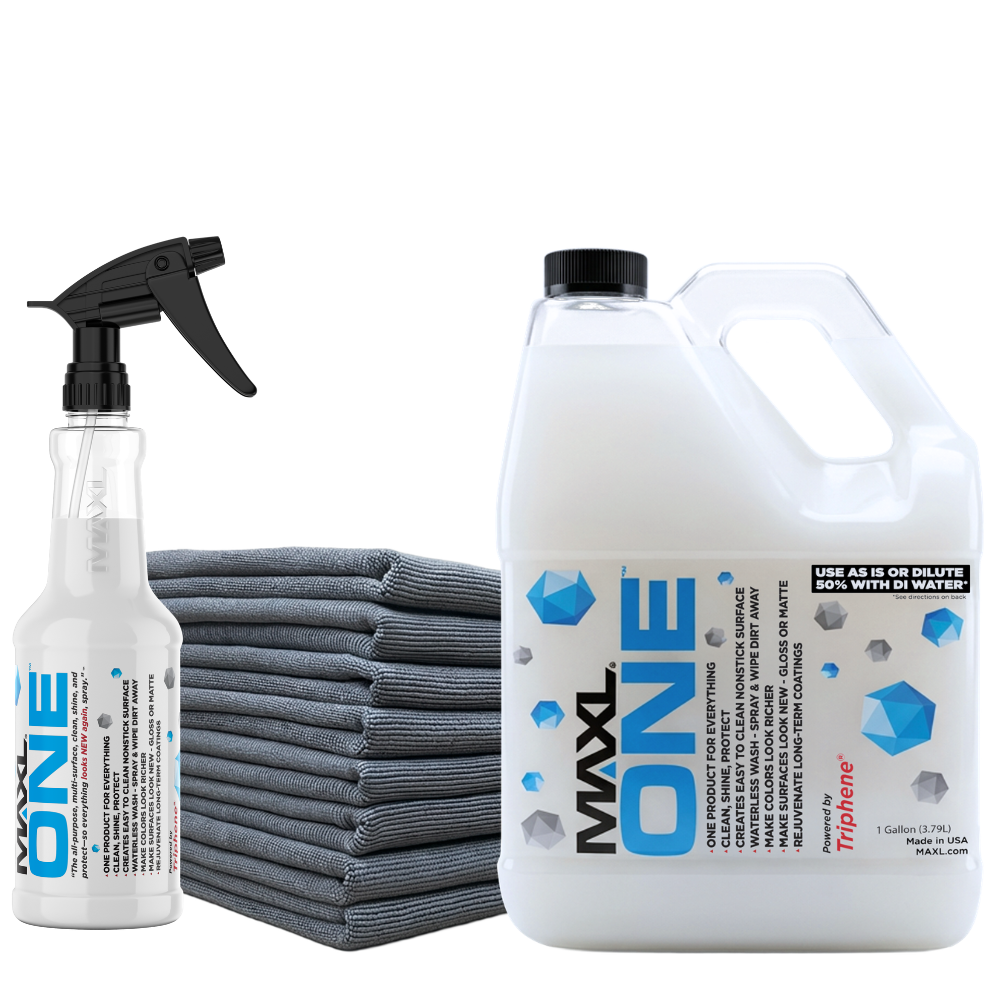
What's actually in the box
Every part of the process is accounted for. You aren't sent a bottle and told to find your own towel.
Real result
Tap to play with sound
No hose · no pressure washer · no appointment
Straight answers
Verified customer reviews
1,247 reviews
Nine-year-old black hatchback that had gone grey-ish. Did the bonnet as a test, difference was obvious enough that I finished the whole car standing in my driveway. No hose involved.
I've had bad experiences with sprays that dry hazy. This buffed off completely clear as long as the coat stayed thin. Used it on the windscreen too and rain just runs off.
First panel I did in full sun and it went patchy. Moved into the garage, redid it, flawless. Four stars only because I'd happily buy a bigger refill size.
This is the actual reason I bought it. Street parking, no hose access, and washing the car used to mean paying someone. Now it's ten minutes in the parking bay.
Three weeks in and the car still looks recently washed. Whatever the low-friction thing is, it's real — light dust blows off instead of settling into a film.
Alloys were my nightmare, brake dust used to bake on. Treated them and the next clean was a wipe rather than a scrub with a brush.
Worth being clear: a genuinely dirty car still needs a rinse first. On a lightly dusty car it's excellent. Judged as a finishing product, it does exactly what it says.
I park under a tree and used to get rings across the roof after rain. Now the water beads and rolls off before it can dry in place. That alone was worth it.
I've bought sprays before and then had to hunt for a decent microfiber. Having the right pad in the box meant a good result on the first attempt, not the third.
Showing 3 of 9
Last thing
Ten minutes, one bottle, and the sky comes back into your paint. That's the entire proposition.
Spray · foam pad · microfiber cloth